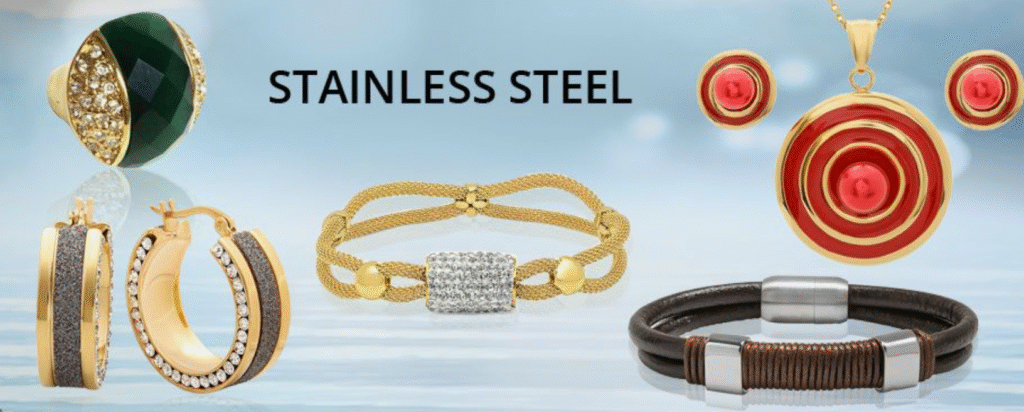
The stainless steel jewelry market has exploded in recent years, and it’s easy to see why. It’s affordable, hypoallergenic, and doesn’t tarnish like silver or fade like plated alternatives. Whether you’re just dipping your toes into the jewelry business or you’re a seasoned brand scaling production, you’ve probably noticed that most quality stainless steel jewelry is manufactured in one place: China.
So why is China the go-to destination for stainless steel jewelry? It boils down to a few key advantages: cost-effective manufacturing, skilled labor, endless design options, and a well-oiled export infrastructure that makes international shipping relatively seamless. Whether you’re a beginner, intermediate, ou advanced buyer, understanding how to navigate this complex but opportunity-rich landscape can make or break your business.
In this guide, we’ll walk you through everything you need to know—from how to find reliable stainless steel jewelry suppliers in China to negotiating like a pro and avoiding common mistakes. This isn’t just a basic overview—we’re going deep, giving you actionable insights for every level of buyer. Let’s get started!
Table des matières
Understanding Stainless Steel Jewelry
Stainless steel jewelry is made primarily from an alloy containing iron, carbon, and chromium. The chromium content (usually around 10.5% or more) forms a passive layer on the surface that resists oxidation—meaning it won’t rust or tarnish over time.
But why is stainless steel so popular in the fashion and accessories market? Simple—it checks almost every box for what both consumers and retailers want:
- Durabilité: Stainless steel is scratch-resistant and tough, making it ideal for everyday wear.
- Affordable: It costs significantly less than gold or silver but still offers a polished, premium look.
- Low maintenance: Unlike sterling silver, it doesn’t need frequent polishing.
- Hypoallergénique: Perfect for sensitive skin, especially when using 316L or 304 grade stainless steel.
Common items in this category include:
- Anneaux (signet, spinner, engagement)
- Bracelets (cuff, chain, beaded)
- Colliers (pendants, chokers, chains)
- Boucles d'oreilles (studs, hoops, huggies)
Plus, thanks to technological advancements in plating (like PVD coating), stainless steel jewelry now comes in gold, rose gold, black, and even rainbow finishes that stay vibrant for years.
Why Source Stainless Steel Jewelry from China?
There’s no denying that China leads the global jewelry manufacturing scene. From small workshop setups to high-tech factories producing for global brands, China offers everything under one roof. But what makes it especially attractive for stainless steel jewelry?
1. Rapport coût-efficacité
Labor and materials in China are still cheaper than most Western countries. This allows suppliers to offer extremely competitive pricing—especially for bulk orders.
2. Advanced Manufacturing Technology
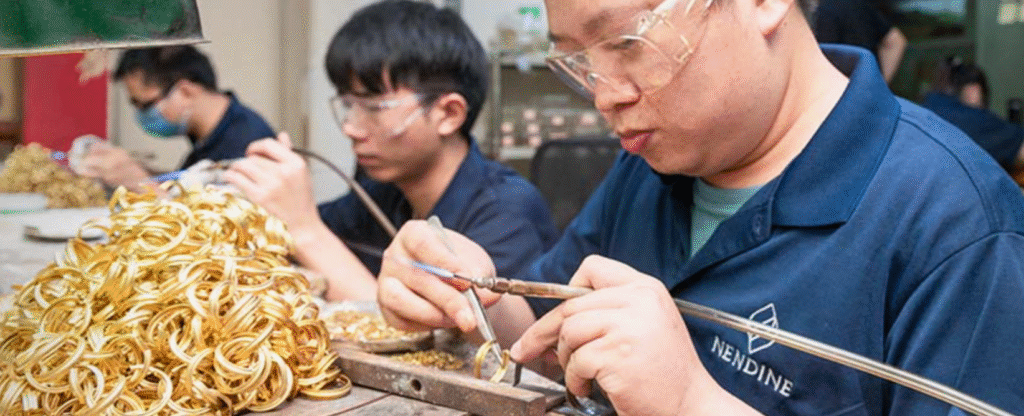
Many suppliers in China use laser cutting, CNC machines, and advanced polishing techniques to create intricate, high-quality pieces with a quick turnaround.
3. Design Variety
From classic to contemporary, minimalist to gothic, you’ll find every style imaginable. Some suppliers release hundreds of new designs every month to keep up with fashion trends.
4. Scalable Production
Whether you need 100 units or 100,000, Chinese suppliers can scale production with ease. Most factories are equipped to handle bulk orders efficiently without compromising on quality.
5. Export Experience
Most suppliers have experience exporting to the US, Europe, and beyond. They understand customs regulations, labeling requirements, and can even help with logistics.
In short, China is not just a manufacturer—it’s a full-service jewelry solution for buyers at every level.
Key Manufacturing Hubs in China
China is massive, and not all regions specialize in the same type of production. Here are the top three cities you need to know if you’re sourcing stainless steel jewelry:
Yiwu
Often dubbed the “Supermarket of the World”, Yiwu is famous for its International Trade City, which has over 70,000 booths selling everything—including stainless steel jewelry. This is ideal for small to mid-size businesses looking for variety and low MOQs.
Guangzhou
Home to many wholesale jewelry markets like the Guangzhou Taikang Jewelry Plaza, this city is a mix of traditional wholesalers and modern manufacturers. If you want access to both ready-made stock and custom production, Guangzhou is a good bet.
Shenzhen
Known for its innovation and quality control, Shenzhen hosts high-end stainless steel jewelry manufacturers. Many of them cater to international luxury brands and offer OEM/ODM services. The focus here is on quality and customization.
Each hub has its pros and cons, and your choice will depend on your order size, design needs, and budget.
How to Find Reliable Stainless Steel Jewelry Suppliers in China
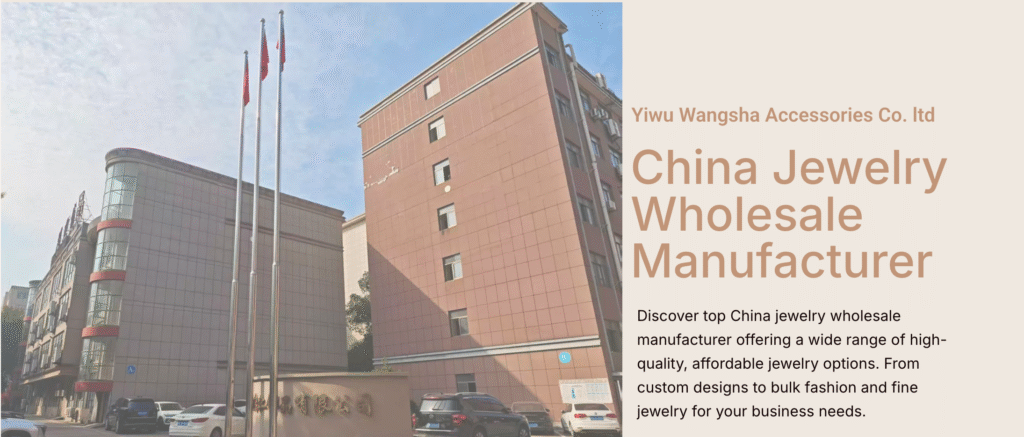
Sourcing suppliers might seem overwhelming, especially with the sheer number of options available. But don’t worry—we’re going to break it down and show you exactly where and how to find trustworthy stainless steel jewelry manufacturers in China.
1. Online B2B Platforms
The internet is the most accessible and scalable place to start. Here are the best platforms:
- Alibaba – The giant in B2B sourcing. Thousands of stainless steel jewelry suppliers are listed. You can filter by verified supplier status, years in business, MOQ, and more.
- Made-in-China.com – Another B2B platform focused on manufacturers, often with more detailed company profiles than Alibaba.
- Sources mondiales – Known for vetting higher-quality suppliers, often with a focus on international trade compliance.
Tips for using B2B platforms:
- Always check for Gold Supplier ou Verified badges.
- Request company certificates, product photos, et videos.
- Utilisation platform messaging for initial communications to avoid scams.
2. Trade Shows and Exhibitions
If you’re serious about sourcing and want to build long-term relationships, visiting trade shows in China is gold.
- Canton Fair (Guangzhou) – One of the largest trade fairs in the world. It covers all types of consumer goods, including jewelry.
- Hong Kong Jewellery & Gem Fair – Features many Chinese stainless steel jewelry suppliers showcasing their best collections.
- Yiwu Fair – Great for small-to-medium businesses. Direct access to hundreds of suppliers under one roof.
3. Sourcing Agents and Buying Offices
If language barriers and logistics seem too much, consider hiring a sourcing agent. They live in China, know the market, and can negotiate, inspect, and ship on your behalf. While you’ll pay a fee, it can save you major headaches.
4. Word of Mouth and Verified Directories
Ask in eCommerce communities, Facebook groups, ou Reddit forums like r/Entrepreneur or r/AmazonFBA. You’ll often find fellow business owners sharing their supplier experiences and recommendations.
You can also explore supplier directories like:
- DHgate (for smaller MOQs)
- 1688.com (Chinese-language version of Alibaba—best used with a sourcing agent)
- ThomasNet et Kompass (for cross-verification)
Les 10 meilleurs fournisseurs de bijoux en acier inoxydable en Chine
To save you some time, here are ten well-reviewed stainless steel jewelry manufacturers based in China. These are examples—not endorsements—but they’ve been vetted based on export experience, product quality, and customer service.
| Supplier Name | Localisation | MOQ | Product Focus | Notable Services |
|---|---|---|---|---|
| Wangsha Jewelry | Yiwu | 50 pièces | High-end stainless steel rings, chains | OEM/ODM, 3D design |
| Bijoux Beyaly | Guangzhou | 30 pièces | Personalized and custom designs | CAD/CAM, branding |
| Xuping Jewelry | Yiwu | 100 pièces | Fashion and costume jewelry | Fast delivery |
| Jinyu Jewelry Co., Ltd. | Dongguan | 200 pcs | Bracelets, bangles, cufflinks | Plating & engraving |
| WKT Jewelry | Guangzhou | 50 pièces | Minimalist styles, druzy and crystal accents | Dropshipping |
| ORIN Jewelry | Shenzhen | 100 pièces | Gold-plated stainless steel | Private label |
| Kalen Jewelry | Guangzhou | 60 pcs | Men’s stainless steel jewelry | Fast MOQ, stock items |
| SOQ Jewelry | Yiwu | 50 pièces | Trendy earrings, necklaces | Trend scouting |
| JINYIN Jewelry | Yiwu | 120 pcs | Charms and pendants | Eco-friendly materials |
| Zhaoyuan Huaan Jewelry | Shandong | 150 pcs | Religious and symbolic jewelry | Custom mold making |
Pro Tip: Always order samples first to test quality before placing a large order. Ask for plating thickness, polishing style, and exact stainless steel grade (e.g., 304 vs. 316L).
Understanding MOQ, Lead Time, and Pricing Models
If you’re new to working with manufacturers, terms like MOQ and lead time might be confusing. But they’re critical to understand before placing any order.
MOQ (Minimum Order Quantity)
- Suppliers often have MOQs ranging from 30 to 500 pieces, depending on the complexity of the item.
- Lower MOQs usually apply to in-stock items, while custom designs require higher quantities.
- Negotiating MOQs is possible, especially if you’re testing a new supplier.
Délai d'exécution
This is the time between placing your order and receiving the finished product.
- Standard lead time: 2–4 weeks for in-stock designs
- Custom designs: 4–8 weeks (includes prototyping and mold creation)
- During holidays like Chinese New Year, lead times can double—always plan ahead.
Pricing Models
- Per piece pricing – Straightforward but can be higher for smaller orders.
- Tiered pricing – The more you order, the cheaper per unit. E.g., 100 pcs = $1.80 each, 500 pcs = $1.50 each.
- Bundled deals – Some suppliers offer packages, like 100 mixed items for a flat rate.
Conseil : Don’t always go for the cheapest price. Low-cost suppliers often cut corners on plating, polishing, or even material quality.
How to Verify the Legitimacy of Suppliers
Scams, ghost factories, and fake certificates are unfortunately real concerns. But there are solid steps you can take to ensure you’re dealing with a legit supplier:
1. Ask for Business Licenses and Certifications
- Request a copy of their business license et ISO certifications (like ISO 9001).
- Check for compliance with CE, RoHS, ou SGS testing reports—especially if selling in Europe or the US.
2. Request Samples
Never skip this step. High-quality suppliers will gladly send samples, often even deducting sample fees from future orders.
Inspect for:
- Finish quality (smooth polish, no rough edges)
- Color uniformity (plating quality)
- Weight and feel
- Branding if applicable
3. Use Third-Party Inspection Services
Companies like QIMA, SGS, et AsieInspection can perform on-site factory audits or pre-shipment inspections for you.
4. Read Reviews and Buyer Feedback
Check Alibaba reviews, Trustpilot, or even YouTube reviews of specific suppliers. Join Facebook groups or Discord servers where other buyers share their experiences.
5. Video Call or Virtual Tour
Ask the supplier to give you a video call tour of their factory or warehouse. This builds trust and helps you assess their professionalism.
Customizing Your Stainless Steel Jewelry Orders
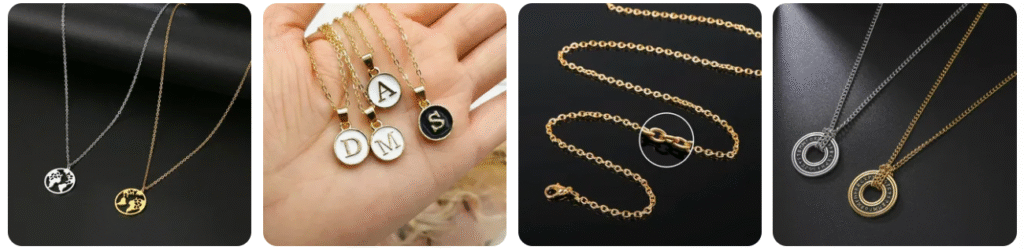
Customization is where your brand truly shines. Whether you’re looking to build a private label collection or simply want to add a unique twist to existing designs, most Chinese stainless steel jewelry suppliers offer a wide array of customization options.
1. Private Labeling & Branding
Want your logo engraved on every piece? Most factories offer laser engraving, etching, ou stamping services. You can even get your brand name printed on packaging, tags, and inserts.
Branding services typically include:
- Logo engraving on jewelry
- Custom packaging design
- Custom product tags or barcodes
- QR code or certificate of authenticity cards
This is essential for building a cohesive brand identity that customers recognize and trust.
2. Custom Molds and Designs
If you’re ready to move beyond stock designs, you can request fully custom pieces. This typically involves:
- Sending sketches or CAD files
- Working with in-house designers
- 3D mockups or samples
- Creating custom molds (one-time cost, usually $100–$500 depending on complexity)
Once the mold is made, your design can be mass-produced with precision. Most suppliers retain molds for up to 2 years if you reorder.
3. Material & Finish Customization
- Stainless Steel Grades: Choose between 304, 316L (medical grade), or even 904L for premium collections.
- Plating Options: PVD coating in gold, rose gold, silver, gunmetal, and rainbow.
- Gemstone Inlays: Cubic zirconia, natural stones, enamel filling, etc.
- Texture: Matte, brushed, high polish, hammered, or sandblasted finishes.
This level of customization is a game-changer, especially if you’re aiming to differentiate yourself in a crowded market like Amazon, Etsy, or Shopify.
4. Packaging Options
Custom packaging adds perceived value and protects your product during shipping. Most suppliers offer:
- Velvet or faux leather pouches
- Branded gift boxes
- Card inserts with care instructions
- Sealed plastic bags with your logo
And yes, you can usually get custom packaging avec low MOQs of around 100–200 units.
Shipping and Logistics from China
Shipping your products from China can feel like a maze at first—but once you understand the basics, it’s fairly straightforward.
1. Common Shipping Methods
| Method | Delivery Time | Best For | Cost |
|---|---|---|---|
| Air Express (DHL, FedEx, UPS) | 3–7 days | Samples, small orders | High |
| Air Freight | 7–14 days | Mid-sized orders (20–500kg) | Medium |
| Sea Freight | 20–40 days | Bulk orders, pallets | Low |
Tip: Always factor in shipping time before major sales seasons (Black Friday, Christmas, Valentine’s Day, etc.)
2. Incoterms Explained
These define the responsibilities of the buyer and seller.
- EXW (Ex Works): You handle everything from factory pickup to delivery.
- FOB (Free on Board): Supplier delivers to the port; you handle shipping from there.
- CIF (Cost, Insurance, Freight): Supplier handles shipping to your destination port.
For most beginners, FOB or CIF are the easiest to work with.
3. Customs and Import Duties
Every country has different regulations, but here’s what to watch:
- HS Code for stainless steel jewelry: 7117.19
- US import duties: Typically 0–11%
- EU VAT: Often applied at customs
Pro tip: Work with a freight forwarder ou customs broker if you’re unsure about the process. Many Chinese suppliers have shipping partners who can guide you.
Avoiding Common Pitfalls When Sourcing from China

Let’s be real—sourcing from overseas has risks. But if you know what to look out for, you can avoid most of the costly mistakes that beginners make.
1. Low-Quality Materials
Not all stainless steel is created equal. Some suppliers may use low-grade metal or thin plating. Always confirm:
- Les stainless steel grade (e.g., 316L is better than 304)
- Plating method and thickness (PVD plating is more durable than electroplating)
- Nickel content, especially if selling in Europe (where nickel regulations are strict)
2. Miscommunication
Language barriers can lead to wrong orders, sizes, or finishes. Here’s how to avoid that:
- Utilisation simple English, short sentences, et bullet-pointed requests
- Confirm details in writing with images, dimensions, and specifications
- Utilisation Google Translate or ask for bilingual sales reps
3. Payment Scams
Never send money to personal bank accounts or via unsecured methods.
Safe payment methods:
- Assurance commerciale Alibaba
- PayPal (for small orders)
- T/T bank transfer (for larger orders, but only after vetting)
Avoid:
- Western Union
- Bitcoin or crypto
- Any supplier refusing to use secure platforms
4. Hidden Costs
Watch out for:
- Extra packaging fees
- Shipping cost fluctuations
- Customs or clearance charges
Always ask for a pro forma invoice that includes ALL costs, and double-check the breakdown.
Negotiation Tips for Better Deals
Negotiating with Chinese suppliers isn’t about being aggressive—it’s about building a mutually beneficial relationship. The key? Know what you want, stay respectful, and bring value to the table.
1. Build Relationships First
In Chinese business culture, relationships—or guanxi—are extremely important. Before jumping straight into price talks:
- Take time to introduce yourself and your business.
- Be friendly and show long-term interest.
- Use video calls to build rapport.
This alone can give you better treatment, faster response times, and insider deals.
2. Use Quantity as Leverage
The more units you order, the more negotiating power you have. But even if you’re a beginner, you can still negotiate by offering:
- A repeat order promise (e.g., “If this sample order goes well, I plan to order 1000+ pcs next time.”)
- A bundle of SKUs (more variety per order)
3. Ask for Value-Adds Instead of Discounts
Instead of pushing hard on price, consider negotiating for:
- Free engraving
- Upgraded packaging
- Faster production time
- Lower MOQs
This often works better and keeps the relationship positive.
4. Know the Price Range
Before negotiating, research the going rate for similar products. Check:
- Other listings on Alibaba, DHGate, etc.
- Competitor product pricing
- Marketplaces like Etsy, Amazon, or AliExpress
Conseil : Suppliers expect negotiation—but don’t push for unsustainable discounts. If the price sounds aussi good to be true, it probably is.
5. Cultural Etiquette
- Avoid being overly direct or confrontational.
- Never insult the product or service.
- Say “thank you” often, and confirm everything in writing.
Working with Chinese Suppliers as a Beginner
Starting out? You’re not alone—and the good news is that China is beginner-friendly if you take the right steps. Here’s your roadmap to a smooth experience.
1. Start Small
- Test with small orders (50–100 pieces).
- Focus on a single product type (e.g., stainless steel rings).
- Order samples from 3–5 suppliers to compare quality.
2. Use Secure Payment and Platforms
As a beginner, it’s safest to work through platforms like:
- Assurance commerciale Alibaba
- PayPal (for sample orders)
- Avoid sending wire transfers to unverified suppliers.
3. Clarify Every Detail
Create a spec sheet for each product that includes:
- Material and grade (e.g., 316L stainless steel)
- Finish (e.g., gold PVD plating)
- Size options
- Logo or engraving placement
- Packaging requirements
Include product images, dimensions, and even videos if needed.
4. Inspect Before Shipment
Use a third-party inspection service or ask the supplier to send videos and close-up photos of finished items before they ship.
5. Stay Organized
Track everything:
- Quotes from each supplier
- Sample notes
- Production timelines
- Invoice and payment confirmations
This helps you stay professional and scale smoothly as you grow.
For Intermediate Buyers: Scaling Up Your Orders
If you’ve placed a few orders and are now looking to grow, this is where the real opportunity begins—but also where the complexity increases.
1. Inventory Management
You need to plan your stock levels carefully to avoid:
- Overordering and tying up cash
- Underordering and missing out on sales
Use tools like Inventory Planner, Oberlo, or even Google Sheets to track:
- Turnover rates
- Sales trends
- Lead times
2. Bulk Discounts and Contract Pricing
At this stage, you should negotiate:
- Fixed pricing tiers based on volume
- Annual contracts with pricing guarantees
- Priority production slots
Suppliers are more flexible when they see you as a reliable, long-term customer.
3. Invest in Quality Control
Work with third-party inspectors to:
- Check random samples from every batch
- Conduct plating and durability tests
- Ensure compliance with your country’s import standards
You can also hire a local quality control agent in China for regular inspections.
4. Upgrade Logistics
For larger shipments, air express becomes too expensive. Switch to:
- Fret maritime for 500kg+
- Fret aérien for 50–500kg
Use freight forwarders like Flexport, ShipBob, ou Easyship to streamline the process.
For Advanced Buyers: Long-Term Partnerships and OEM/ODM Projects
If you’re an experienced buyer looking to develop your own unique jewelry line, or build a strong, scalable brand, it’s time to move beyond basic transactions and start strategic partnerships with suppliers. This is where OEM (Original Equipment Manufacturer) et ODM (Original Design Manufacturer) services come into play.
1. Developing a Private Label Brand
Private labeling allows you to sell jewelry under your own brand name, complete with custom designs, logos, and packaging. Here’s what this process looks like:
- Share your brand story, style preferences, and target audience.
- Work with a supplier’s in-house design team or hire your own designer.
- Finalize materials, plating, engraving, and packaging details.
- Review 3D renderings and request prototypes.
- Launch the collection and reorder based on demand.
Having a strong private label not only builds customer loyalty but also allows you to charge premium pricing.
2. Full Customization with OEM Services
If you want to create jewelry that’s 100% your own, OEM is the way to go. You provide the design and the supplier manufactures it according to your specs.
Benefits include:
- Full control over design and materials
- Market exclusivity (no one else sells your designs)
- Better positioning in niche markets
OEM projects typically require:
- Higher MOQs (500–1000 pcs)
- Investment in custom molds
- Ongoing communication for revisions and improvements
3. ODM: Let Suppliers Design for You
ODM is ideal if you want to offer unique, trendy designs without spending time on product development. Suppliers create original designs and allow you to brand them as your own.
This works great for:
- Seasonal collections
- Trend-focused drops
- Flash sales or influencer collaborations
4. Intellectual Property Protection in China
One major concern with OEM/ODM projects is IP theft—but you can minimize risk by:
- Registering your trademark in China via the China Trademark Office (CTMO).
- Signing a Non-Disclosure Agreement (NDA) et Non-Compete Agreement (NCA) before sharing designs.
- Working with legally registered and ISO-certified manufacturers.
Some platforms, like Alibaba, now offer IP protection programs to assist in resolving infringement issues.
The Future of Stainless Steel Jewelry Manufacturing in China
As the global demand for stainless steel jewelry rises, China’s manufacturing capabilities are evolving rapidly. Here’s what you can expect in the near future:
1. Eco-Friendly and Sustainable Production
Consumers are becoming more conscious of the environment, and manufacturers are following suit. Forward-thinking suppliers are now:
- Using recycled stainless steel
- Adopting wastewater treatment systems
- Reducing the use of harmful chemicals in plating
If you want your brand to be eco-conscious, look for suppliers who comply with RoHS, REACH, ou ISO 14001 standards.
2. Integration of Smart Technologies
Tech is changing jewelry—literally. We’re seeing the rise of:
- Smart stainless steel rings (with NFC chips)
- Fitness and health tracking pendants
- Bluetooth-connected lockets
While still niche, some Chinese suppliers are investing in this crossover space. If your audience is tech-savvy, this could be a future product line.
3. Shorter Production Cycles
Thanks to automation, suppliers are shortening their lead times without sacrificing quality. That means:
- Faster restocking
- Better responsiveness to market trends
- Increased agility for small brands
This is especially beneficial for DTC (direct-to-consumer) brands that rely on rapid inventory turnover.
4. Greater Transparency and Digitization
New platforms and services are making it easier to:
- Track shipments in real time
- Receive live factory updates
- Conduct virtual product tours
As transparency becomes more expected, trustworthy suppliers are offering more visibility into their operations—which builds confidence, especially for international buyers.
Conclusion
Sourcing stainless steel jewelry from China can be one of the most rewarding moves for your brand—whether you’re a beginner testing the market, an intermediate buyer scaling your business, or an advanced entrepreneur building a private label empire.
With the right supplier, smart negotiation, clear communication, and strategic planning, you can unlock high-quality, low-cost, customizable products that keep your customers coming back for more.
Remember, the key isn’t just finding a supplier—it’s about building a long-term relationship that evolves with your brand’s goals.
So whether you’re ordering your first 50 pieces or launching your tenth collection, China’s stainless steel jewelry manufacturers have what it takes to help you succeed.
FAQs About Stainless Steel Jewelry from China?

Look for ISO 9001, RoHS, et CE certifications. If you’re selling in Europe, make sure the products are nickel-free and comply with REACH standards.
2. Can I visit a supplier’s factory in China?
Absolutely. Many suppliers welcome international buyers. Just schedule your visit in advance and confirm location, translator availability, and COVID/travel requirements.
3. What’s the average production time for custom stainless steel jewelry?
- In-stock items: 2–3 weeks
- Custom designs: 4–8 weeks, depending on complexity and mold creation
4. Are there English-speaking suppliers or translators available?
Yes, most suppliers—especially those on Alibaba or Global Sources—have English-speaking sales reps. For smaller factories, consider hiring a local interpreter ou sourcing agent.
5. How do I handle defective items in bulk orders?
Always include a quality control clause in your agreement. Reputable suppliers will replace or refund defective items if you provide proof within an agreed time frame (usually 7–14 days after receipt).